


I have the quintessential love/hate relationship with light meters. I usually get the best results when exposing manually, but on the other hand, I really like the idea of just taking it easy and to go with what ever the light meter tells me, thus I tend to do both according to the feels of the day. Manual exposures requires you to learn at least the sunny 16 rule + some compensation skills to go with it and I’d argue that after doing the home work, it is the most reliable way to go, because the light meter can never know your interpretation of the scene or what are you trying to meter from.
In black and white film photography, it is generally the best idea to expose for the shadows, but different rules of thumb apply to colour negative or slide film and your camera doesn’t know what film you’re using.
I found these wonderful golden rules from my camera’s manual:
- Expose color slide films for the highlights, and let the shadows fall where they may.
- Expose color negative films for the important middle-tone areas, and never fear over exposure.
- Expose B&W films for the shadows, and develop for the highlights.
Blindly trusting the light meter or using a automatic exposure mode, feels sometimes just heavenly, when you can’t be bothered to use your braincells. But, especially in high contrast scenes, light meters will fail very easily, unless you don’t remember to compensate. I usually don’t remember, because I’m in the mindset of letting the camera to do the work. This is why I get often pretty underexposed images with the light meter and ae-modes. The problem with the high contrast scenes is that you should be metering for the shadows and thus giving the film about a couple of stops more light than the meter is telling you to. The meter is being tricked because it is metering from the area that happens to have a lot of brightness sneaking into the frame as well. But as a seasoned black and white shooter, you should actually be ignoring the bright areas, and not to take them into count.
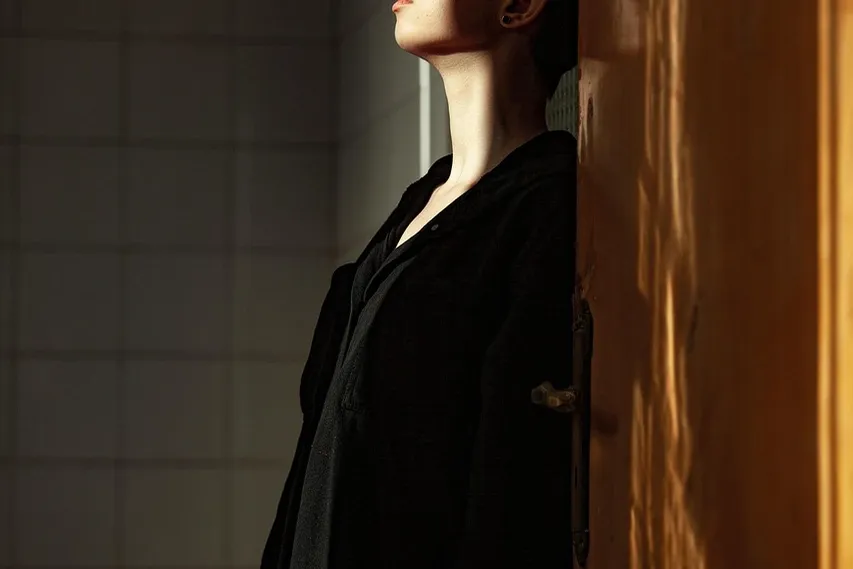
Low contrast situations are much more reliable scenarios to shoot with light meter and/or auto-exposure mode. (That should be rather easy to expose manually as well.) That’s because the scene is more constant in brightness values.

Only refer the meter
Most film cameras tend to have center weighted light meters, but I’ve noticed that even if there’s a single bright spot at the very edge of the frame, that can still fool the meter big time, and cause you underexposure, because the camera thinks there’s more light than there actually is. The trick is to take the reading first from the shadowed area and then to compose the image.
In my opinion, the best way is to learn the manual exposure rules, such as the sunny 16 rule thoroughly and to use the light meter as a backup. That way you can meter rather intuitively. When exposure skill is your second nature, you don’t have to waste so much time with fiddling with the settings. You’ll just know the exposures from the experience. It actually makes the shooting that much more enjoyable, because you can concentrate on the subject, composition, focusing, timing etc. If you have to keep looking at the meter needle, it draws your attention away from the other things. BUT in fast changing light that can really cause an overheating of your brain.
So yeah, I’d recommend sunny sixteeing firstly and using the light meter more like a backup, or as a reference point. I usually pre-meter in advance, as I walk about and if I happen to use a lightmetered camera, ask the meter for the second opinion to cross reference my own questimation. The key thing is to stay focused and really to pay attention to the lighting conditions. Fully manual camera kind of keeps you on your toes, because you’re on your own. Perhaps the most reliable approach is to use the best aspects of both methods, manual and metered, not relying solely on either one. Do the homework and learn the theory of manual exposure. Then shoot with your intuition and use the light meter to back you up when you’re in doubt.
Something else to read perhaps?
 Ilford HP5+ vs. Kodak Tri-x (feat. sample photos)
 What to do when you want BOKEH on a sunny day?
 The best 35mm colour negative / c-41 films (with…
 How to shoot with rangefinders — part 1: eyes wide open
 Money saving tips for film photography — cutting…
 Why I'm quitting hipshots and zone-focusing
 5 additional methods (part 2) on approaching your…
 Getting better at street photography by improving…

2 Comments
Tenhöboy
Metering disaster #2 is no disaster. I love the cobbled street texture and how the cobblestones vanish into infinity.
Pekka
Thanks! Maybe it’s not that bad after all. 😀
Comments are closed.